Wednesday, September 14, 2011

Why a Leaf Changes Color?

In the Summer, trees have plenty of light and water, but as autumn comes, the days shorten and they loose the ability to produce enough light and water for photosynthesis.   

Photosynthesis is process that converts carbon dioxide into organic compounds, especially sugars, using the energy from sunlight.  Basically, the trees are able to live off of the food that is stored up from the summer.  The color green will begin to change to either a yellow, red, or orange depending on the type of tree. What a gorgeous sight to see!!!


Saturday, June 25, 2011

The Butterfly Project

Butterflies develop and mature in four different stages of life.  

1. An adult butterfly lays an egg.
2. The egg hatches into a caterpillar or larva.
3. The caterpillar forms the chrysalis or pupa.
4. The chrysalis matures into a butterfly.


The wing span of a butterfly can reach 3 to 4 inches across.  They are beautiful, but fragile so be careful if you want to catch one!


It is time to be creative.  Lets make our own butterfly by clicking on the link above.  

HAVE FUN!!!!

Sunday, April 10, 2011

Volcano Eruption Experiment

This project shows what happens when an acid (vinegar) and a base (baking soda) interact. Chemically, the acid and base neutralize each other, producing carbon dioxide gas as a byproduct. Easy and simply to do at home! Try this fun experiment today...


                     Watch Volcano Demo

In a real volcano, molten rock forms deep within the Earth and erupts through the volcano (the molten rock is called magma), which forms within the Earth, causing the lava to flow out!  You have several features of a volcano: Magma Chamber, main Vent, Secondary Vent, Secondary Cone, Crater, Lava Flow, Prognostic Flow, Volcanic Bombs and an ash cloud!  

Sunday, March 20, 2011

Super Full Moon


March 19th was the first full moon of its size since 1993.   These rare large moons only occur once in every 20 years.  When you play the video above, you will get an inside look at the 14% size difference and the reasons, believed, behind this unique illusion.

Monday, March 7, 2011

Science Made Fun for Everyone!!!

Scientist James working with his students 
High Touch High Tech was developed as a way for children to become engaged in the wonderful world of science.  The sscientists attentively listen to and encourage the students to contribute their own ideas and opinions through interactive dialogue. What makes this program so successful is the hands on experience the students receive along with collaboration skills being developed among peers.  Bottom line, You must try to challenge your children/ students on a creative and intellectual level without making it a chore.  Make learning fun!!!  Please read the attached link for an example of science made fun.  Scientist James

Saturday, February 5, 2011

How does the Basilisk Lizard Walk on Water?

The Basilisk lizard, AKA the Jesus lizard, are found in the Tropical Rain Forest of Central & South America and they are finding a passage to the US.  They have a unique ability from all other animals; they can walk on water.  This is possible due to the flaps between their toes that support them above the water as they are rapidly moving across, keeping their head up.  As you watch the video below, you can see how the lizard is able to balance themselves along with keeping up their speed. To read more a more dept study, please see Nation Geographic

Jesus Lizard

Tuesday, January 18, 2011

Family Science Night

What a fun and interactive way to engage a child, "Family Science Night".  Check out the creativity from Lupin Hills Elementary School in California.  They participated in this unique event that investigated earthworms, mysterious smells and reactions to different chemicals.  Around 225 students along with their parents explored in this outreach program. The kids & parents partnered together and they found that science can be fun!  More details.

Sunday, January 9, 2011

How do lava experiments work?

Lava Lamps are fun to create and they are very simplistic, meant for any age group .  The only ingredients you need is Water, Vegetable oil, salt, food coloring and a cool glass jar.  You are probably wondering, how in the world does this work! Well, Oil is less dense than water so it is able to float above the water.  When you add the salt, the salt crabs part of the oil and drags it to the bottom of the jar because it is denser than the water.  The Salt will then start to break down and dissolve.  


For more information and steps on how to do create a lava lamp, please read on.... lava lamp


Monday, January 3, 2011

1st Graders examine their surroundings

Using your senses (video)
Think blocks is a wonderful and simple idea for children in early development to gain a better perspective on how to depend/ understand your senses.   They are designed to teach four essentially important thinking skills: 
(1) Contrasting between similarities and opposites or “distinction making”
(2) Understanding part-whole structures or “systems thinking”
(3) Recognizing interactions, associations, and cause and effect or “relational thinking
 (4) Learning to see things from different points-of-view or “perspective taking” 
This is just another way to make science fun!!!

Sunday, December 26, 2010

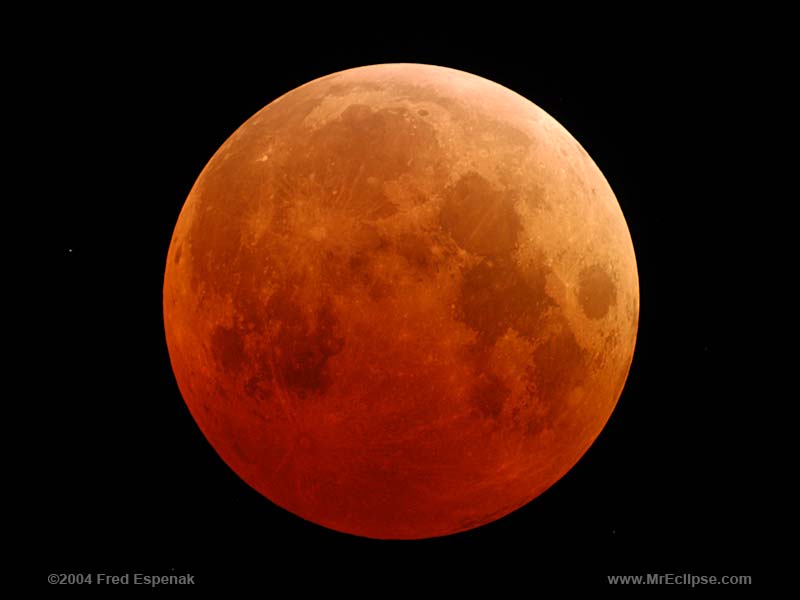
Total Lunar Eclipse Syncronicity

The Total Lunar Eclipse is an amazing, yet rare experience.   We were fortunate enough to have this opportunity to see this on the day of the Winter Solstice, which is the shortest day of the year in the Northern Hemisphere and marks the official beginning of winter, December 21, 2010.  The last time this was seen was on Dec. 21, 1638.  The winter Solstice will not be see again until Dec. 21, 2094.  Kurdistan Planetarium Video

Sunday, December 19, 2010

AIr Pressure Experiment


Watch this simple, yet fun, experiment you can do with your child to show the role oxygen plays with air!  This is a creative way for children to get a better understanding or the uniqueness the two play. Air and oxygen are sometimes used interchangeably, but the two things are actually very different.  This is sometimes hard to articulate, so having the ability to involve a child into a project gives them a higher success rate in understanding the concepts behind the science.


Monday, December 6, 2010

NASA Rover Finds Water

NASA's mission of launching the Rover has taken many years to perfect.  Take a look at the video below for an inside look into the exciting breakthrough thanks to science!
successful mission


Evidence discovered by the Rover leads scientists to believe that due to frost and snow, thin films of water has entered from the ground.  This could have occurred during one of the several climate changes as Mars tilts farther on its axis.  Mars Exploration

Saturday, November 20, 2010

Space Shuttle to Mars by mid 2030's!


A new mission is in the works for NASA space program.  President Obama wants to  further our pursuit from reaching the moon structure to blasting our rockets towards an asteroid.  Then, maybe one day, reaching Mars. The goal of this new and improved program is to have human beings see an asteroid, first hand, in the year 2025, according to Obama.


NASA’s Kennedy Space Center near Orlando, Fla
Space Program


As the next generation comes into the world, they will see way beyond the Moon and maybe Mars.  Isn't it remarkable how much science has plays a roles in just about everything we do or see?  This is why it is so important that we find a way for our children to WANT to learn the meaning behind science.  SCIENCE CAN BE FUN!  Lets make it FUN.

Sunday, November 14, 2010

Butterfly Wings with Waterproof Coats

For many years, scientist have been trying to replicate the effects of repelling water. Look at the Butterfly below, you will see the uniqueness of how water forms into beads that simply roll off.  
Because the change of seasons, manufactures have been asking for scientist to help turn this process into a consumer product line.  Whether it's a pair of boots, gloves, a raincoat, or even snow pants this is an essential mineral needed to keep animals and humans dry and warm.  Thanks to science, we have several different prototypes on the market and every year, they keep improving!

Saturday, November 6, 2010

One of Indonesia's most active volcano's has erupted, sending gas and molten lava tumbling down its slopes into the residences below.  More than 700,000 people have been relocated or sent to shelters.  When we think of volcano's in our schools, we tend to demonstrate the magnitude of the eruption along with its beauty, but we do not put enough emphasis on the devastating impacts it has on the local communities at large.    
Indonesia_Disasters

Monday, November 1, 2010

New species discovered in Amazon

The Amazon is home to an estimated 2.5 million insect species, several hundreds of thousands of plants and 1 in five of all birds in the world live in the rainforest's.  We haven't even touched on the Mammals or amphibians. We may never know all the different types of species; discoveries occur ever 3 to 4 days. Take a look at the most recent finds.  New Species


Sunday, October 31, 2010

What are 3 different types of matter?


This is a perfect example of  turning science into a fun activity.  What a unique way to learn!    Science is suppose to be exciting and invigorating!  Take a look at how a simple project can turn into a lesson plan.  Matter 

Wednesday, October 27, 2010

Special Halloween Demonstration

Here are three unique pumpkin demonstrations for the entire family to enjoy!  This is a wonderful way to bring the excitement of science to the eyes of children.  As many of you already know, we are lacking the educational requirements in this field.  Lets spark the interest of our children!  Please just watch and enjoy as a family, do not try this on your own.

http://www.youtube.com/watch?v=O2799XSIlZM

Wednesday, October 20, 2010